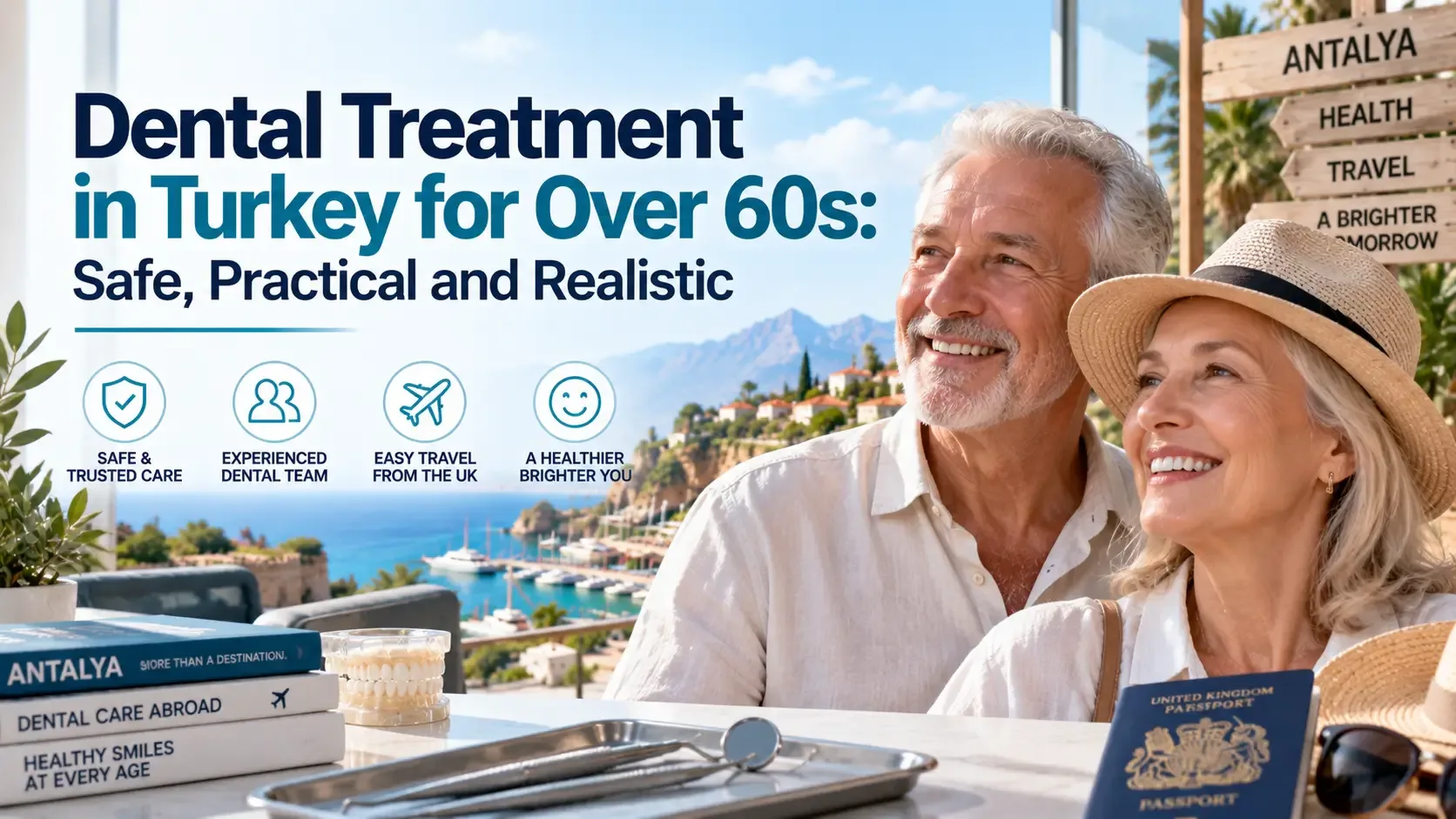
For many people over sixty, dental problems build up slowly. A few missing teeth become a lower denture that never quite fits, and a long list of treatments sits unaddressed because the cost in the UK is simply too high. Dental treatment in Turkey is attractive for this reason, but the questions older patients ask are different from those of a thirty-year-old. Is the journey tiring? Is treatment safe with my medication? How do I manage the aftercare when I'm back at home? This guide takes those questions seriously and answers them in a practical way.
Is There an Upper Age Limit for Dental Treatment?
There is no fixed age at which dental treatment becomes inappropriate. What matters is your general health, your medication and the condition of your gums and bone, not the number of candles on the cake. Dental implants, for example, are placed successfully in patients in their seventies and eighties, provided they are healthy enough for minor surgery and heal reasonably well. A responsible clinic will look at the person in front of them rather than applying a blanket rule in either direction.
Health Checks Before You Travel
Before you book, it is sensible to speak to your GP, especially if you have a heart condition, diabetes, high blood pressure or a history of strokes. Ask whether there is any reason you should not have a minor surgical procedure, and whether your medication needs to be adjusted around treatment. Bring an up-to-date list of everything you take, including over-the-counter medicines and supplements, and share it with the clinic ahead of time. Honest and complete information here is not a formality. It is what lets the dental team plan treatment safely.
Medications That Matter to Your Dentist
Some medicines have a direct effect on dental treatment, and your dentist needs to know about them. Blood thinners affect how you bleed after surgery, and your doctor may need to advise whether any adjustment is appropriate. Certain medications used for osteoporosis and some cancer treatments can affect how the jawbone heals after extractions or implant surgery, so they need careful consideration. Medicines that cause a dry mouth can also raise the risk of decay and gum problems. Mentioning them early lets the clinic choose the safest plan, or tell you honestly if treatment should wait.
The Journey: Is It Tiring?
Direct flights from the UK to Antalya take roughly four and a half hours, which most people find manageable. Plan the trip around your comfort rather than the cheapest fare. A direct flight, an airport transfer arranged in advance and a hotel close to the clinic make a big difference. If you have circulation problems or are prone to blood clots, speak to your GP about travelling and about measures to reduce the risk on a flight. Allowing a rest day on arrival, before any treatment, helps you start in better shape.
Travelling With a Companion
Many of our older patients travel with a spouse, friend or family member, and it is a good idea if you can. A companion can help with the practical side, such as appointments, transport and meals, and can offer reassurance after treatment when you may feel tired or tender. It also means a second person has heard the treatment plan and can help you to recall the details afterwards. If you are travelling alone, tell the clinic in advance so they can plan the schedule and support accordingly.
What Treatments Are Most Common for Older Patients?
Dental implants to replace one or more missing teeth.
Implant-supported dentures, which hold a denture firmly in place without the movement of a conventional one.
Full-arch solutions such as All-on-4 for people who have lost most or all of their teeth.
Crowns and bridges to repair worn or broken teeth.
New dentures for patients who prefer a removable option or are not suitable for implants.
The right choice depends on your health, your bone, your budget and what you want from your teeth, which is the starting point of every consultation.
Implants vs Dentures in Later Life
Many older patients are surprised to learn how different implant-supported solutions feel compared with conventional dentures. A denture that moves when you eat or speak can be frustrating, and it can affect confidence and enjoyment of food. Implants, or implant-supported dentures, can give far more stability. They cost more at the start, but in many cases they are a worthwhile investment in comfort. Our separate guide on implants versus dentures walks through the comparison in more detail, including why dentures are still the right answer for some patients.
Bone Loss and Grafting
After many years without teeth, or after wearing dentures for a long time, bone loss in the jaw is common. This does not rule out implants, but it may mean a bone graft or a sinus lift is needed before implants can be placed, which adds time to the treatment. An honest scan and assessment will show where you stand. With 32 years of dental experience, our view is that older patients are best served by a straightforward explanation of what is possible, and by a plan that avoids more surgery than is actually needed.
Pacing the Treatment So It Is Comfortable
A well-planned schedule makes treatment easier at any age. That usually means shorter appointments, rest between visits and avoiding too many procedures in a single sitting. Comfort options such as sedation are available for patients who are anxious or find long appointments tiring, and they are discussed in our guide to sedation dentistry in Turkey. Ask the clinic how long each visit will last and what happens on the days in between. A clear plan removes much of the stress.
Eating and Recovery
After surgery, the first few days call for soft food, gentle cleaning and plenty of rest. If you are having a full-arch treatment, a temporary set of teeth is normally fitted while the implants heal, so you leave with a functioning smile. Nutrition matters in healing, and older patients in particular should keep up protein and fluid intake even when eating feels awkward. Your clinic should give you a clear written guide to what to eat, what to avoid and when to call for help.
Aftercare Once You Are Home
Ask for copies of your X-rays, your treatment plan and a record of the materials used, because your UK dentist will need these for routine care. Keep your regular hygiene appointments, since good gum health is vital to the long-term success of implants and restorations. Agree in advance how you will contact the clinic if you have any concern, and what they will do to help. A clinic that is easy to reach after you leave is worth far more than one that simply offers a lower price.
Travel Insurance and Practical Details
Check your travel insurance policy carefully. Some policies exclude planned medical or dental treatment abroad, or exclude conditions you already have. Specialist cover for medical tourism exists and may be worth considering. Allow some flexibility in your return flight in case you need an extra day to rest or have a final check. Taking a printed list of your medication, your GP's contact details and your emergency contact is simple and sensible.
Is Dental Treatment in Turkey Right for You?
For many patients over sixty, it is a realistic and sensible choice, particularly when the cost of treatment at home has been a barrier for years. It works best when your health has been checked, the schedule is paced for comfort and you have a clear plan for aftercare. It is worth thinking carefully, or choosing a different route, if you have complex medical needs that require close local monitoring or if the journey itself would be a real burden. An honest conversation at the start will help you decide.
Why Experience Counts With Older Patients
Treating patients in later life calls for judgement as much as technique. Healing can be a little slower, medical histories are longer and the margin for unnecessary procedures is smaller. A team that has treated thousands of patients over three decades learns when to keep things simple, when to stage treatment and when to say that a particular procedure is not worth the risk. That is the kind of honest, measured advice older patients deserve, and it is the main reason experience matters more than any promotional package.
A Realistic Expectation of Cost
Treatment in Turkey is usually considerably less expensive than private treatment in the UK, and for older patients on a fixed income that can be the difference between getting treatment and going without. It is still worth asking for an itemised written plan that includes every stage, any bone grafting, temporary teeth and follow-up visits, so that there are no surprises. Add flights, accommodation and the cost of a companion to your comparison, and then decide whether the overall saving makes sense for you.
Getting Started
If you're over sixty and considering dental treatment in Turkey, send us your recent X-rays if you have them, a short summary of your health and the medication you take, and let us know what you would like to achieve. We'll give you an honest view of what is realistic, how we would pace your treatment and how we would support you after you get home.